 by
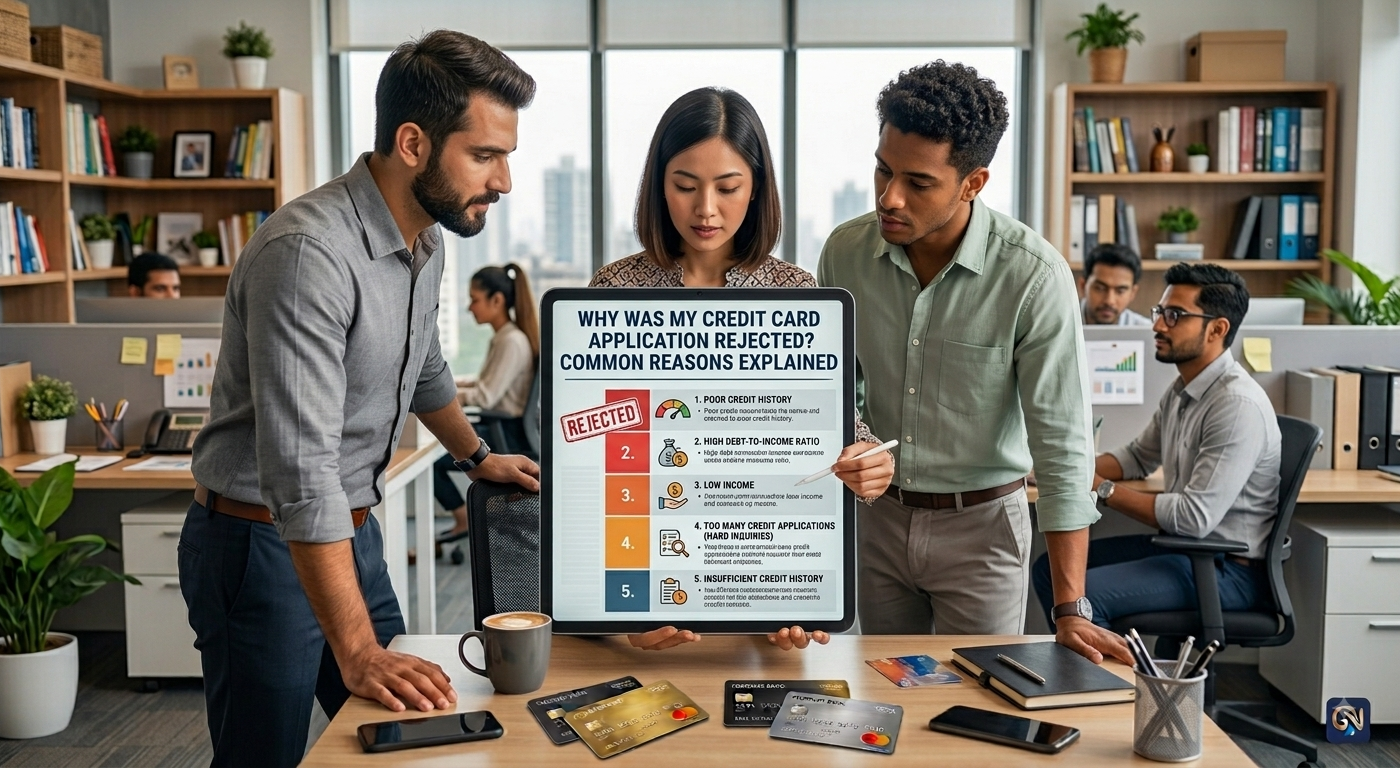
by Applying for a credit card can be exciting, especially when you find a card with attractive rewards, cashback, travel benefits, or a lifetime-free offer. But sometimes, the bank rejects the application even when you believe you meet the basic eligibility requirements.
A rejection does not always mean that you have a bad credit score. Banks consider several factors before approving a credit card, including income, repayment history, existing debt, credit enquiries, employment, and their own internal lending policies.
Understanding why a credit card application was rejected can help you avoid the same problem in the future and choose a card that better matches your financial profile.
What Does a Credit Card Rejection Mean?
When a bank rejects your application, it means the issuer decided not to approve the card based on its eligibility or risk assessment.
Every bank can have its own criteria. Meeting the advertised minimum income or age requirement does not guarantee approval.
For example, you might meet the basic eligibility conditions but still be rejected because of your credit history, existing obligations, recent applications, documentation, or the bank’s internal assessment.
The important thing is not to assume that one rejection means you cannot qualify for any credit card.
Common Reasons for Credit Card Rejection
Several factors can lead to an unsuccessful application.
| Reason | Why It Can Matter |
|---|---|
| Low Credit Score | May indicate higher lending risk |
| Limited Credit History | Gives the lender less repayment information |
| High Credit Utilization | May suggest heavy dependence on available credit |
| Existing Debt | Can affect repayment capacity |
| Low Income | May not meet the card’s requirement |
| Unstable Employment | Can affect income stability assessment |
| Too Many Applications | Recent enquiries may influence the profile |
| Incorrect Information | Can create verification problems |
| Incomplete Documents | Application may not be processed successfully |
| Internal Bank Policy | Each issuer has its own risk criteria |
Your Credit Score May Be Too Low
Your credit score is one of the factors lenders may consider when reviewing a credit application.
A lower score can result from late payments, defaults, high credit utilization, or other negative information in your credit history.
However, there is no single credit score that guarantees approval for every credit card.
A strong score can improve your profile, but banks may still consider other information before making a decision.
If your application was rejected, check your credit report rather than focusing only on the score.
You May Have a Limited Credit History
Having no negative credit history does not necessarily mean you have a strong credit profile.
If you have never used a loan or credit card, the lender may have limited information about your repayment behavior.
This is sometimes called a thin or limited credit file.
For people with little credit history, a secured credit card backed by a fixed deposit may be an alternative to consider. Such cards can provide an opportunity to demonstrate responsible credit usage.
High Credit Utilization Can Hurt Your Profile
Credit utilization refers to how much of your available revolving credit you are using.
For example, if your total credit limit is ₹1 lakh and your outstanding balance is ₹80,000, your utilization is 80%.
Repeatedly using a large portion of your available limit can make your profile look more financially stretched.
This does not mean you should avoid using your credit card. Instead, try to keep balances manageable and pay your bills on time.
Your Income May Not Match the Card
Credit cards have different income requirements.
An entry-level card may be designed for applicants with moderate income, while a premium travel or lifestyle card may require substantially higher income.
Even if your income is enough for one card, it may not meet the requirements of another.
Before applying, check:
- Minimum income
- Employment requirements
- Age limits
- Residential requirements
- Required documents
- Existing customer requirements
Choosing a card that matches your income can reduce the possibility of an unsuccessful application.
Existing Debt Can Affect Approval
Banks may consider your existing financial obligations when assessing whether you can comfortably manage additional credit.
Suppose you already have several loans, multiple credit cards, or large outstanding balances. The lender may view a new credit application differently than it would for someone with fewer obligations.
Existing debt does not automatically result in rejection, but your overall repayment capacity can matter.
Too Many Recent Applications
Submitting several credit card applications within a short period can create multiple credit enquiries.
Each application may involve an enquiry by the lender. A large number of recent enquiries can sometimes make your credit profile appear more credit-seeking.
Instead of applying for every card you see, compare eligibility requirements first and apply only for cards that genuinely fit your profile.
Late Payments Can Be a Major Problem
Payment history is an important part of your credit profile.
Late payments on existing credit cards, personal loans, auto loans, or other credit accounts can negatively affect your credit history.
Even if you currently have a good income, recent repayment problems can make a lender more cautious.
Before applying for a new card, review your existing accounts and make sure payments are being made on time.
Incorrect Information in Your Application
Sometimes the problem is not your financial profile but inaccurate information.
For example, an incorrect PAN number, address, employer detail, income figure, or other personal information can create verification problems.
Always check your application carefully before submitting it.
Do not exaggerate your income or employment information simply to qualify for a premium card. Providing inaccurate information can create additional problems during verification.
Incomplete or Unsatisfactory Documents
Banks may request documents to verify your identity, address, income, or employment.
If required documents are missing, unclear, outdated, or inconsistent with the information in your application, the application may not proceed successfully.
Keep commonly requested documents ready, such as:
- PAN
- Accepted identity proof
- Address proof
- Salary slips
- Bank statements
- Income Tax Returns, where applicable
Exact requirements vary between issuers and cards.
Your Employment Profile May Matter
Banks can consider your employment and income stability when evaluating an application.
Salaried and self-employed applicants can both qualify for credit cards, but the verification process may be different.
If you recently changed jobs, have irregular income, or have limited documentation as a self-employed applicant, the bank may have less information to assess your repayment capacity.
This does not automatically mean rejection, but it can be one factor in the overall decision.
You May Not Meet the Bank’s Internal Criteria
This is one of the most frustrating reasons because you may never know the exact internal calculation.
Banks use their own credit policies and risk models. Two banks can receive the same application and reach different decisions.
For example, one issuer may approve an applicant while another may reject the same person.
Therefore, rejection does not necessarily mean that your overall financial profile is poor.
What Should You Do After a Rejection?
Do not immediately submit applications to several other banks.
Instead, start by understanding what may have caused the rejection.
Check Your Credit Report
Review your credit report for:
- Late payments
- Incorrect account information
- Unrecognized accounts
- High outstanding balances
- Incorrect personal details
- Recent credit enquiries
If you find an error, contact the relevant credit bureau or lender and follow its dispute process.
Review Your Existing Debt
Look at your current loans and credit card balances.
If you are using a large percentage of your available credit, reducing outstanding balances may help improve your overall credit profile over time.
Wait Before Applying Again
If you have recently submitted several applications, avoid immediately sending more.
Give yourself time to understand your credit profile and address any issues that may have contributed to the rejection.
Choose a More Suitable Card
If you applied for a premium card with high income requirements, consider whether a more basic card is appropriate for your current financial situation.
A secured credit card may also be worth considering if you have limited credit history and meet the issuer’s requirements.
Can a Rejected Application Damage Your Credit Score?
The application itself is not the same thing as being rejected.
When a lender makes a hard enquiry while assessing your application, that enquiry can appear on your credit report. Multiple enquiries within a short period may affect your credit profile.
The exact impact can vary, so it is better to apply selectively rather than submitting applications to many issuers at once.
How to Improve Your Chances Next Time
Before applying again, focus on building a stronger overall profile.
Pay existing bills on time, keep credit card balances manageable, avoid unnecessary applications, maintain accurate personal information, and choose cards whose eligibility requirements match your income and financial situation.
If your credit report contains incorrect information, work on getting it corrected.
Improving a credit profile usually takes time. There is no legitimate shortcut that guarantees credit card approval.
Frequently Asked Questions
Why was my credit card rejected even though my credit score is good?
A good credit score is only one part of the application. Income, existing debt, employment, recent enquiries, documentation, and the bank’s internal policies can also influence approval.
Can I apply for another credit card after rejection?
You can, but applying immediately for multiple cards may not be the best approach. First understand why the previous application was unsuccessful and choose a card that better matches your profile.
Does credit card rejection lower my credit score?
The rejection itself is not necessarily what affects your score. A lender’s credit enquiry during the application process may appear on your credit report and can have an impact depending on your overall credit profile.
Can I get a credit card with no credit history?
Possibly. A secured credit card backed by a fixed deposit may be an option for some applicants with limited or no credit history.
How long should I wait before applying again?
There is no universal waiting period. The better approach is to first identify and address the reason for rejection rather than applying again immediately.
Final Thoughts
A rejected credit card application can be disappointing, but it does not necessarily mean that you have poor finances or cannot qualify for a card.
Banks consider multiple factors, and each issuer can have different approval criteria. Your credit score, income, repayment history, existing debt, credit utilization, recent enquiries, employment, documents, and internal bank policies can all play a role.
Instead of applying repeatedly, check your credit report, understand your financial position, and select a card that fits your current profile.
Most importantly, focus on responsible credit habits. Paying bills on time, keeping balances manageable, and applying selectively can help you build a stronger credit profile over time.
Guide Nobbe provides general financial information for educational purposes only. Credit card approval criteria, fees, and policies vary between issuers and can change. Always check the latest requirements directly with the card issuer before applying.